
Why is My Basement Leaking?: 5 Reasons to Consider Basement Leak Repair
Picture this: you’re cozied up in your home, enjoying a peaceful evening when suddenly you hear the dreaded sound of water trickling. Panic sets in as you realize your basement is leaking, and you’re suddenly searching for reliable basement leak repair solutions as water begins making its way inside.
Dealing with excess water and basement leaking is a common issue faced by homeowners in Michigan and Ohio.
If you’ve noticed water accumulating, don’t panic, it doesn’t necessarily mean your home was built incorrectly. Hydrostatic pressure and the “Clay Bowl” effect can cause leaks in most foundations.
That being said, prompt basement leak repair is critical to preventing further damage. Investigating the root cause of the issue can help you avoid any serious consequences down the line.
Why Is My Basement Leaking?
Basement leaks are caused by various factors in Michigan and Ohio, including the climate and soil type.
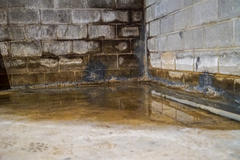
1. Rain & Snow Melt
Heavy rainfall and snowmelt can oversaturate the soil and create hydrostatic pressure, pushing water through the basement walls and the basement floor. We’ll dig deeper into hydrostatic pressure coming up.
2. Freeze-Thaw Cycle
The freeze-thaw cycle, where water seeps into cracks and then expands and contracts as temperatures fluctuate, can also cause damage to your foundation and create pathways for water to enter.
3. Soil Type
The soil type in different parts of Michigan can also play a role in basement leaks.
The clay soil in Southeast Michigan quickly becomes oversaturated during heavy rainfall, while sandy soil in Northern Michigan can create a more permeable foundation, allowing soil to easily wash out.
4. Hydrostatic Pressure
Hydrostatic pressure occurs when water seeps into the ground around the foundation and gradually builds up.
The water buildup puts pressure on basement walls. As hydrostatic pressure increases, water will attempt to find a way into your basement anyway it can—seeping through porous concrete, block wall foundations, cracks, and wall joints.
As hydrostatic pressure increases and decreases, it continually adds and takes away stress from basement walls, resulting in movement.
When hydrostatic pressure decreases and water dries out around the foundation, the house can settle.
This expanding and shrinking can create lateral pressure. Lateral pressure will create horizontal, vertical, diagonal, or stair-step cracks and weaken the walls, creating a perfect opening for water to intrude.
5. Clay Bowl Effect
In addition to pressure buildup, the “Clay Bowl” effect also causes basement leaks.
When building a foundation, workers dig a hole in the ground that is larger than the actual basement. After the foundation is built, this hole is backfilled with excavated soil.
This backfill soil will never be as tightly packed as the original untouched soil .As a result, the backfill soil absorbs more water after rain or snow.
When water gets into the backfill soil, it forms a sort of “clay bowl” around your home, creating an artificial water table right next to your basement—exactly where you don’t want it to be.
Effects of a Wet Basement on Your Home
When your basement is wet, it can wreak havoc on your home, causing a range of problems that can be both frustrating and expensive.
Here are just a few examples of the negative impacts that a wet basement can have on your home:
- Damage to your foundation
- Reduced air quality and mold growth
- Damaged possessions and furniture
- Decreased home value
- Increased risk of pests, like insects and rodents
- Higher energy bills due to increased humidity
It’s important to address basement leaks as soon as possible to prevent these issues from occurring or worsening.
How to Repair Your Leaking Michigan Basement
Repairing a leaking Michigan basement can be a daunting task. Here are a few steps you can take to repair your leaking basement:
- Ensure gutters are free of clogs and in good condition.
- Make sure your yard is graded for water to flow away, rather than towards your foundation. A landscaping company can help.
- Contact a waterproofing company to pinpoint the problem and suggest repairs like an interior drainage system, or a sump pump.
Don’t let water damage compromise the safety and value of your home.
Addressing the issue early can save you time, money, and headaches in the long run.
Trust Foundation Systems of Michigan to Fix Your Wet Basement

At Foundation Systems of Michigan, we offer proven solutions to fix any basement leak, no matter where it’s coming from.
Our team of experts will inspect your basement and provide you with the best solution to meet your needs and budget.
From interior drainage to sump pumps and energy-efficient dehumidifiers, FSM has more than 15 years experience working in your neighborhood.
With an A+ rating from the Better Business Bureau, you can trust Foundation Systems of Michigan to provide quality and reliable service.
Don’t let a wet basement ruin your home or put your family at risk. Schedule a free inspection or call us today at 877-DRY-MICH to learn more about how we can help.
FAQs
In winter, the thawing of frozen ground and snow can create excess water around your foundation, which can lead to leaks.
Rainwater can increase hydrostatic pressure on basement walls and floors, seeping through existing cracks or imperfections.
Even minor moisture should not be ignored as it can indicate early signs of a bigger problem and can lead to mold and mildew growth.

Leah Leitow
Publish Date:
Last Modified Date:
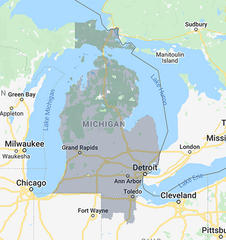
Our Locations
32985 Schoolcraft Road
Livonia, MI 48150
5985 Clay Avenue SW
Grand Rapids, MI 49548
2817 Bond St.
Rochester Hills, MI 48309
5555 Airport Hwy
Toledo, OH 43615
3805 Elmers Industrial Drive
Traverse City, MI 49685